
Lecturer Features & Use Cases
1. Account Management
Create Lecturer Account
- Register with university email
- Assigned as Lecturer by admin
- Associate with university
- Receive lecturer permissions
2. Module Management
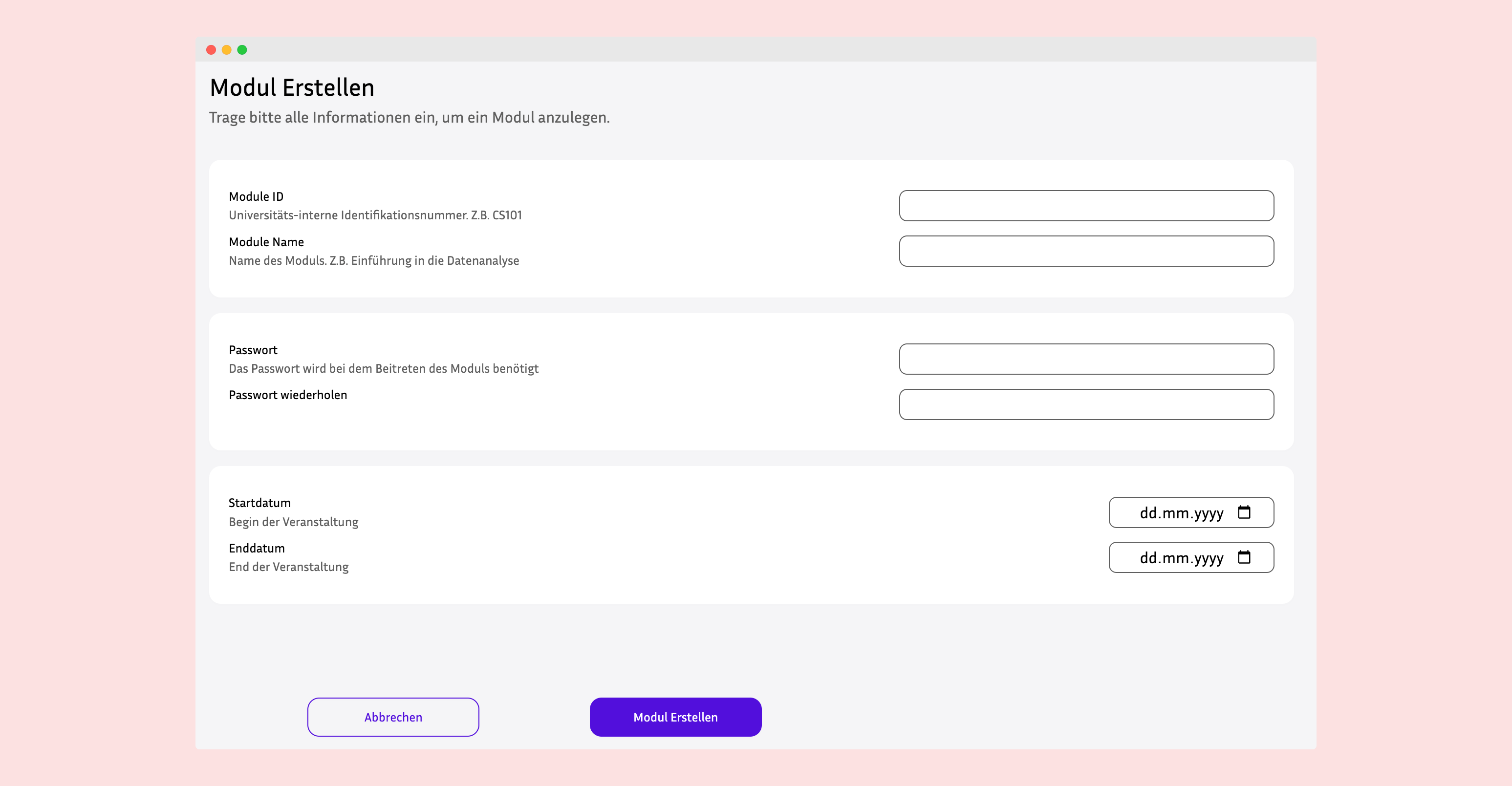
Create New Module
- Define module details:
- Module name (e.g., “Mathematics I”)
- Module code (e.g., “MATH101”)
- Semester (Winter/Summer)
- Start and end dates
- Survey days (select days of week: Monday, Wednesday, etc.)
- Module password for student enrollment
- Set module status (Active/Inactive)
- Assign to university
Configure Module Settings
- Set survey schedule days (e.g., Mondays and Thursdays)
- Define semester period
- Create secure enrollment password
- Update module status
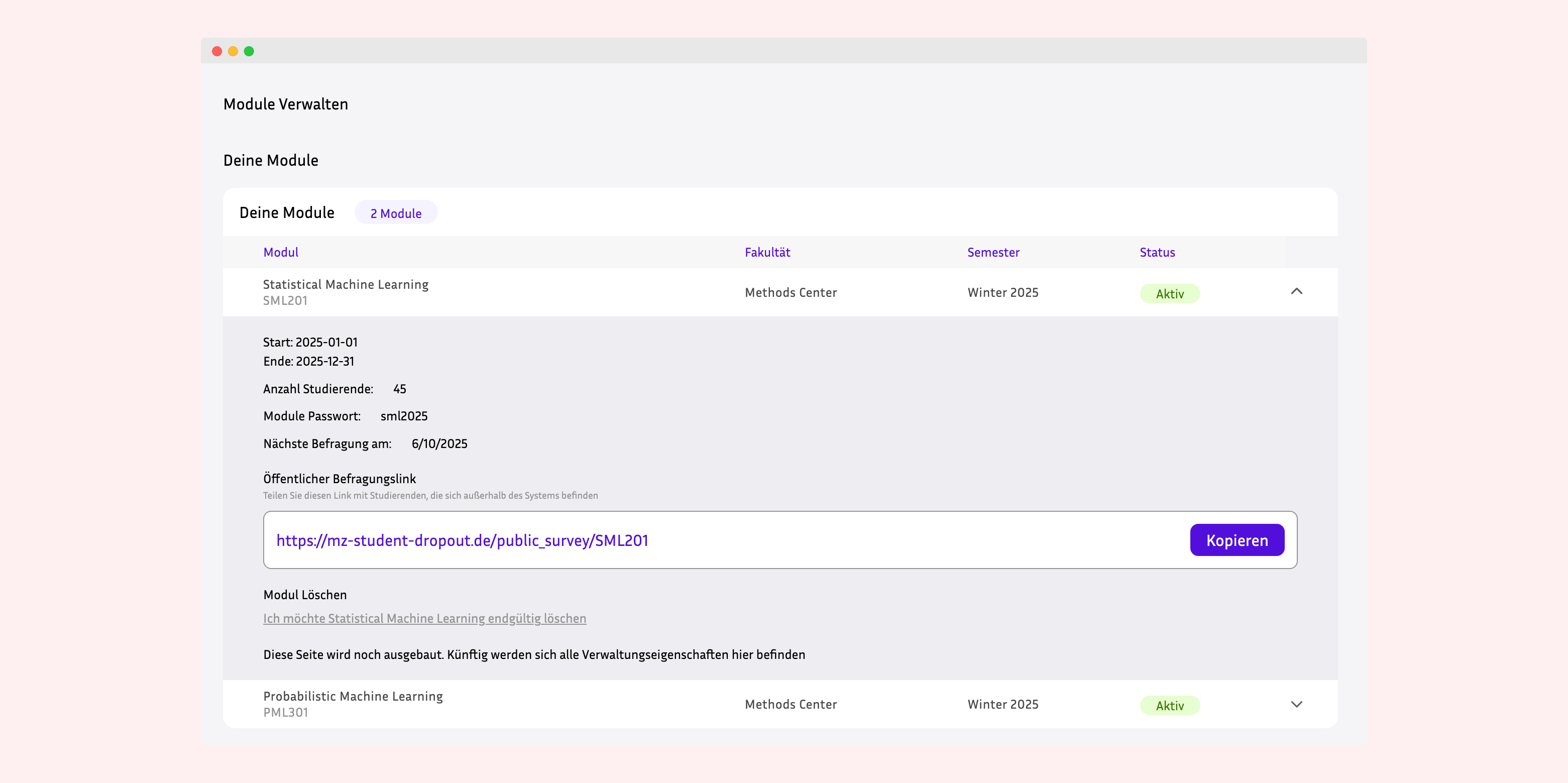
Manage Module Access
- Share module password with enrolled students
- Control module activation/deactivation
- Update module information
- Archive completed modules
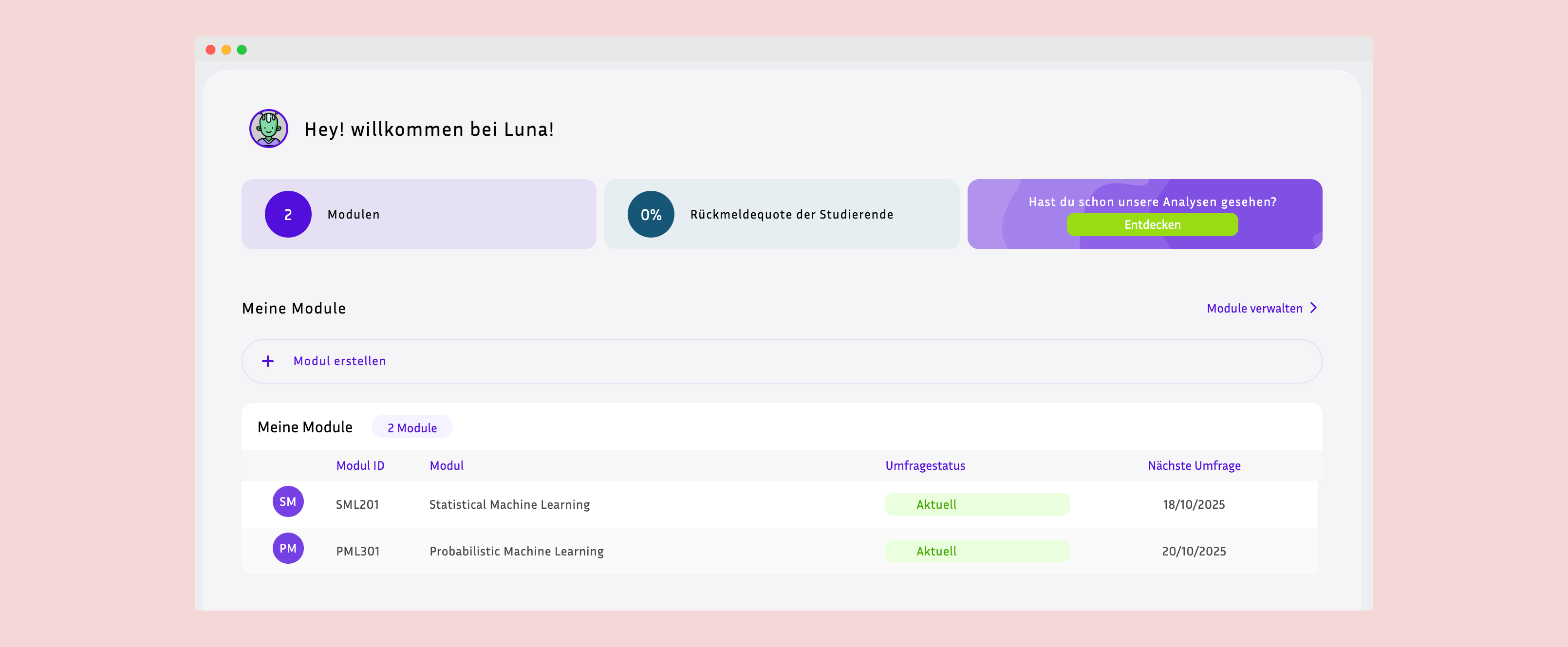
View Module Statistics
- See total enrolled students
- Monitor enrollment trends
- Track student participation
- View module activity
3. Survey & Form Management
Create Survey Forms
- Design custom forms using JSON structure
- Define question types and formats
- Set form metadata (name, description)
- Configure form deployment settings
Deploy Surveys
- Surveys auto-deploy on configured survey days
- System automatically creates StudentSurvey instances
- All enrolled students receive surveys simultaneously
- Cron job handles scheduled deployment
Monitor Survey Responses
- View survey completion rates
- Track submission timestamps
- See individual student responses
- Monitor resolution status (Completed/Not Completed)
Manage Survey Content
- Update survey questions
- Modify form structure (JSON)
- Create multiple survey versions
- Archive old surveys
4. Student Management
View Enrolled Students
- Access list of all students in module
- See student profile information:
- Name and email
- Student ID
- Enrollment date
- Demographic data (if permitted)
Track Student Participation
- Monitor survey completion per student
- View participation rates
- Identify at-risk students (low participation)
- Track longitudinal engagement
Manage Enrollments
- Approve/reject enrollments (if manual approval enabled)
- Remove students from module
- View enrollment history
- Export student lists
5. Data Collection & Analysis
Access Survey Data
- View all survey responses for module
- Export data in various formats
- Access raw JSON response data
- Download datasets for analysis
Generate Reports
- Survey completion statistics
- Student participation metrics
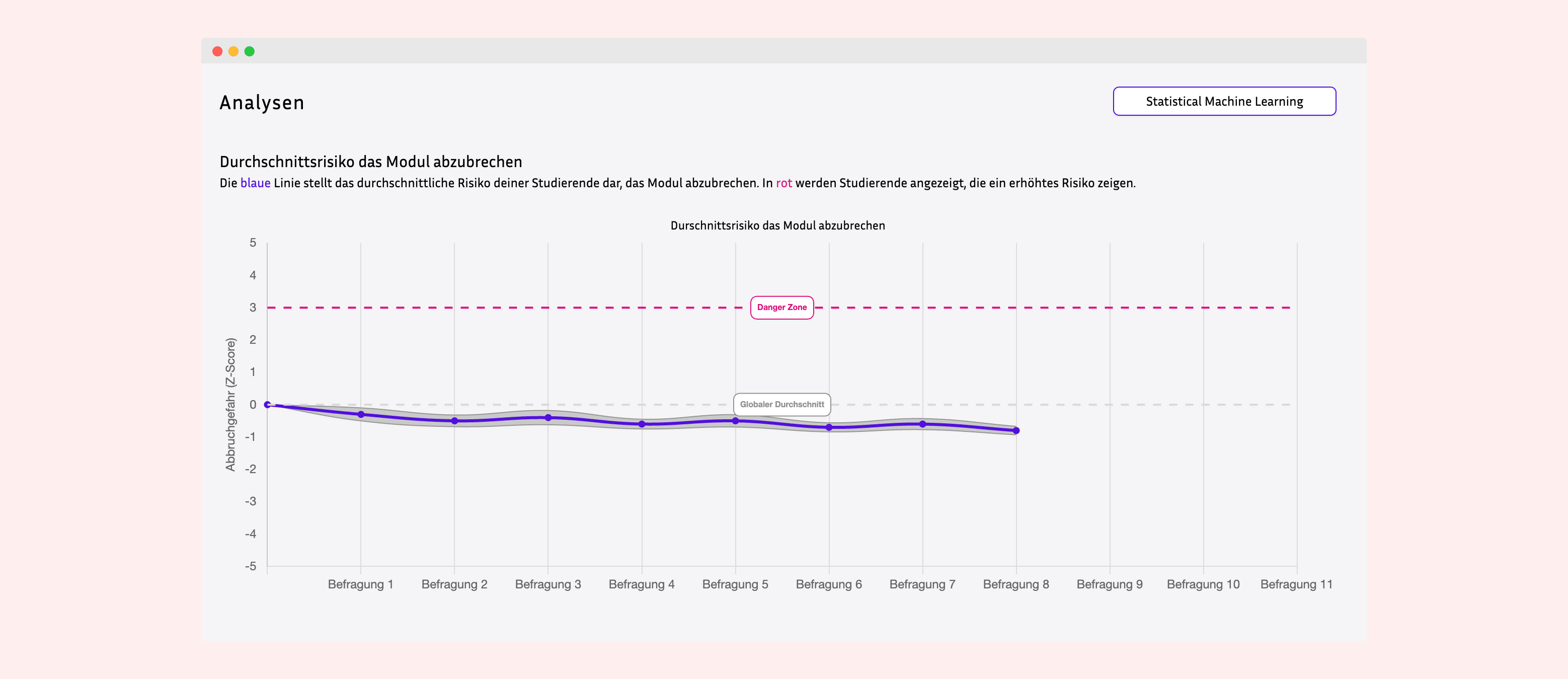
- Time-series response data
- Module performance indicators
Export Data for Research
- Extract structured datasets
- Export to CSV, JSON formats
- Prepare data for statistical analysis
- Support psychometric modeling
6. Administrative Functions
Module Lifecycle Management
- Create module at semester start
- Activate for student enrollment
- Monitor throughout semester
- Deactivate at semester end
- Archive for historical records
System Configuration
- Configure survey automation settings
- Manage cron job schedules
- Set notification preferences
- Update module parameters
Lecturer User Workflows
Typical Semester Setup Workflow
Weekly Monitoring Routine
Lecturer Capabilities Summary
What Lecturers Can Do:
✅ Module Management- Create and configure modules
- Set survey schedules
- Manage module lifecycle
- Control access with passwords
- Design custom forms (JSON)
- Deploy surveys automatically
- Monitor response rates
- Track completion status
- View enrolled students
- Track participation metrics
- Identify non-responders
- Monitor engagement trends
- Access survey responses
- Export datasets
- Generate reports
- Prepare research data
- Use Django admin panel
- Configure system settings
- Manage users (limited)
- View analytics
- Collect longitudinal data
- Export for statistical analysis
- Support psychometric modeling
- Generate insights
Lecturer Interface Components
Key Admin Panel Sections:
- Dashboard - Overview of owned modules
- Modules Management - CRUD operations for modules
- Forms/Surveys - Create and manage survey instruments
- StudentSurvey - View and export response data
- StudentModule - Monitor enrollments
- Users - View student profiles (limited)
- Reports - Analytics and statistics
Module Detail View Components:
- Module Information - Name, code, dates, status
- Enrolled Students - List with participation stats
- Survey Schedule - Configured survey days
- Response Tracking - Completion rates and trends
- Data Export - Download options
Automated Features for Lecturers
Survey Auto-Deployment
- Cron Job: Runs every 12 hours
- Logic: Checks current day against module survey_days
- Action: Creates StudentSurvey for enrolled students
- Benefit: No manual survey distribution needed
Enrollment Management
- Student Self-Enrollment: Password-based system
- Automatic Profile Creation: StudentUser auto-created
- Validation: Unique student-module constraint
- Benefit: Reduced administrative overhead
Data Integrity
- Survey Numbering: Auto-incremented per student-module
- Timestamp Tracking: Automatic creation and submission times
- Status Management: Resolution auto-updated on submission
- Benefit: Clean, structured datasets
Best Practices for Lecturers
Module Setup
- Create module at least 1 week before semester start
- Test survey deployment with sample students
- Communicate password clearly to students
- Set realistic survey days (not too frequent)
Survey Design
- Keep surveys concise (10-15 minutes max)
- Use consistent question formats
- Test JSON structure before deployment
- Include clear instructions in form
Data Collection
- Monitor participation weekly
- Send reminders for low responders
- Export data regularly for backup
- Document survey versions for reproducibility
Student Communication
- Explain research purpose clearly
- Emphasize data privacy
- Provide technical support
- Acknowledge participation importance
Benefits for Lecturers
Research Benefits
- Automated Data Collection - Scheduled survey deployment
- Longitudinal Datasets - Time-series student data
- Flexible Survey Design - JSON-based customization
- Export Capabilities - Multiple data formats
Administrative Benefits
- Self-Service Enrollment - Password-based system
- Automated Tracking - Participation monitoring
- Centralized Management - Single admin interface
- Scalability - Support multiple modules/cohorts
Educational Benefits
- Student Insights - Understanding affective states
- Early Warning - Identify at-risk students
- Intervention Support - Data-driven decisions
- Course Improvement - Evidence-based refinements
For technical details, see Architecture Guide For installation, see Installation Guide For student features, see Student Experience